


出版社/著者からの内容紹介
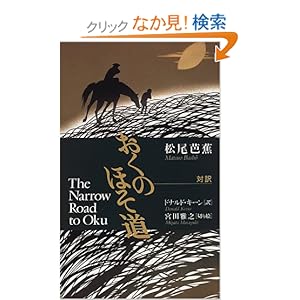
古典文学の最高峰、「おくのほそ道」をドナルド・キーンが新訳 。
。
画家宮田雅之が精魂を込めた切り絵の魅力とあいまって、歴史的名作に新しい生命が吹き込まれた必読の一冊。
。画家宮田雅之が精魂を込めた切り絵の魅力とあいまって、歴史的名作に新しい生命が吹き込まれた必読の一冊。
A deluxe, bilingual edition of the classic featuring the inspired translation of Keene and original kiri-e illustrations by Miyata Masayuki.
内容(「BOOK」データベースより)
ドナルド・キーンの名訳と宮田雅之の刀の冴えによって甦る俳聖芭蕉の寂の世界。
内容(「MARC」データベースより)
自らを風狂の乞食と称し、独創の旅文学を練り上げた芭蕉。その寂の世界「おくのほそ道」にドナルド・キーンが対訳をつけ、切り絵の第一人者・宮田雅之の作品を添えたもの。〈ソフトカバー〉
著者について
Translation: DONALD KEENE
U.S. scholar, and translator of Japanese literature, Donald Keene
was born in New York City and graduated from Columbia University, where he received a PhD in 1949. He studied Japanese literature at Cambridge University, in England and Kyoto University. Keene's scholarly works include The Japanese Discovery of Europe (1952; revised edition, 1969) and a series of volumes on the history of Japanese literature which began with World Within Walls (1976) and continued with Dawn to the West (2 vols, 1984). His translations of Japanese literary works include The Tale of the Bamboo Cutter (Taketori monogatari; tr. 1956), Essays in Idleness (Tsurezure- gusa; tr. 1967), The Treasury of Loyal Retainers (Kanadehon chushingura; tr. 1971), and fiction by Mishima Yukio and Dazai Osamu. Keene became a member of the American Academy of Arts and Letters in 1986. The Donald Keene Center for Japanese Culture was established at Columbia University in the same year. Illustrations: MASAYUKI MIYATA (1926-1997)
Masayuki Miyata was born in Akasaka, Tokyo in 1926. He was discovered by the distinguished writer Tanizaki Jun'ichiro, and he went on to create his own distinct realm in kiri-e (cut-out illustrations). His cut-out pictures, made with mere sheets of paper and a cutting blade, and their exceptional accessibility to people from all countries, have won admiration. In 1981, his work Japanese Pieta was selected for the modem religious art collection in the Vatican Museum-he is only the fourth Japanese artist so honored this century. In 1995, the bi-centennial anniversary of the UN, Miyata was selected from contemporary artists worldwide to be the UN's official artist, the first Japanese to hold the post. His masterpiece, Red Fuji, was reproduced in special limited edition in 184 countries around the globe. Miyata continued to be actively engaged in international art circles as the most prominent kiri-e artist in Japan until his death in 1997.
His representative works include illustrations for Oku no Hosomichi (The Narrow Road to Oku), Taketori monogatari (Tale of a Bamboo-Cutter), Man'yo koi-uta (Poems of Love from the Man'yoshu), and Hana no Ran (Passion in Disarray).