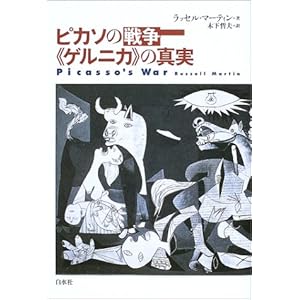
出版社/著者からの内容紹介
20世紀を象徴する名画《ゲルニカ》誕生の秘密と、その後の波乱の軌跡を追う。惨劇を描いた真意、フランコとの確執、バスク自治闘争など逸話満載。
戦争と平和
の意味を知る格好の書。
内容(「BOOK」データベースより)
名画誕生とその後の波瀾万丈を追う。惨劇を描いた真意、内戦とフランコとの確執、バスク自治問題などを解く。「9月11日」後、反戦と平和の祈りを伝える熱いメッセージ。
内容(「MARC」データベースより)
20世紀を象徴する名画「ゲルニカ」誕生の秘密と、その後の波乱の軌跡を追う。惨劇を描いた真意、内戦とフランコとの確執、バスク自治問題などを解く。9.11後、反戦と平和の祈りを伝える熱いメッセージ。
From Publishers Weekly
"Painting is not done to decorate apartments. It is an instrument of war." So said Spaniard Pablo Picasso, who created the famous painting Guernica during the Spanish Civil War in reaction to the Nazis' bombing of the Basque village of the same name. Guernica is widely regarded as the best known work of anti-war visual art ever made. Wyman takes a friendly, straightforward approach to reading Martin's historical and personal account of the life of the massive painting, reminiscent of a favorite college professor. His occasional accents work more as an indication of a change of speaker rather than as convincing characters, but his enthusiasm for this saga of art, politics and tragedy makes it a winning performance. The story of Guernica's life after its creation is as fascinating as the events that inspired it are horrific. After the painting received much criticism when it was first exhibited in Paris in
1937, the world later deemed it a masterpiece. New York's Museum of Modern Art kept it safe from the political turmoil in Spain for decades until it was finally demanded back in the 1980s. In 2001, when Martin (Beethoven's Hair) finally saw the work-a monument to the horrors of war-he was told by a stranger that he should get to a television. It was September 11. Martin is now speaking publicly about the parallels between the "terror and unspeakable cruelty" of September 11 and Guernica, making this a surprisingly timely audiobook.
Copyright 2003 Reed Business Information, Inc.
--このテキストは、絶版本またはこのタイトルには設定されていない版型に関連付けられています。
Book Description
From the bestselling author of Beethoven's Hair comes a stirring narrative account of the bombing of the town that inspired one of the world's most celebrated and controversial works of art, the painting Guernica's profound impact on the politics and culture of the twentieth century, and the artist whose immense passion and artistic vision are unequaled in modern history.
On April 26, 1937, in the late afternoon of a busy market day in the Basque town of Gernika in northern Spain, the German Luftwaffe began the relentless bombing and machine-gunning of businesses, homes and villagers to test a new type of warfare waged from the air at the request of General Francisco Franco and his rebel forces. Three-and-a-half hours later, the village lay in ruins, its population decimated. This act of terror and unspeakable cruelty the first intentional, large-scale attack against a nonmilitary target in modern warfare outraged the world, and compelled a Spanish painter to respond with artistic fury. Pablo Picasso, an expatriate living in Paris, reacted immediately to the devastation in his homeland by beginning work on the canvas that would become his testament against the horrors of war.
Guernica has become widely considered the greatest artwork of the twentieth century in the sixty-five years since its creation, and has been claimed as a powerful symbolic image first by the embattled government of Republican Spain and then, over time, by the international communist party, American artists opposing the war in Vietnam, international peace organizations, Basque separatists, survivors of the attack on the World Trade Center on September 11, 2001, and people everywhere.
Weaving themes of conflict and redemption, doom and transcendence, and featuring some of the century's most memorable and infamous figures, including Adolf Hitler, Eleanor Roosevelt, George Orwell, Jackson Pollock, Lillian Hellman, and Picasso himself, Martin follows this renowned masterwork from its fevered creation through its journey across decades, from many countries of Europe to America and finally and triumphantly to Spain. Picasso's War is a book that vividly demonstrates how vital art is to human lives and how sometimes it even transfigures tragedy, a story that delivers an unforgettable portrait of an artistic genius whose visionary rendering of the terrible wounds of war still resonates profoundly today.
--このテキストは、絶版本またはこのタイトルには設定されていない版型に関連付けられています。
出版社からのコメント
1937年4月26日、スペイン・バスク地方の古都ゲルニカが、
ナチスの爆撃機により無差別に空襲され、多数の死傷者を出し、なにもかもが灰燼に帰した。
その前年には、フランコ反乱軍のクーデターからスペイン全土は内戦に様相を転じ、欧州ではファシズムの嵐が吹き荒れていた。既に名声を博し、パリに在住していたピカソは、フランコと憎みあっていたが、祖国や故郷、闘牛を愛し、その行く末を常に案じていた。
ゲルニカの悲報がピカソに与えた衝撃は計り知れないものだった。近く開催されるパリ万博のスペイン館に出品する壁画を依頼されていたピカソは、ゲルニカに起こった惨劇、想像を絶する恐怖にさらされた犠牲者に思いをはせ、一心不乱に筆を運んだという。
そして完成した《ゲルニカ》は、戦争という暴力、それに屈する人間の悲惨さを見事に表した、天才による世紀の傑作だった。しかし、当時は賛否両論が巻き起こり、美学的、政治的にも大きな波紋を呼び、パリ万博は閉幕した。 その後の《ゲルニカ》はロンドンやニューヨークに渡り、第二次大戦や戦後を通じて、波瀾万丈の軌跡を辿ることになる……。
著者がバルセロナに留学していた時期、スペインには《ゲルニカ》はなく、30年を経てようやく《ゲルニカ》について教えを受けた恩師とも再会を果たし、いよいよ実物と対面した日が、奇しくも2001年9月11日。《ゲルニカ》を鑑賞中に貿易センタービル倒壊の報に接する、という悲劇的な状況から本書は始まる。20世紀を象徴する名画《ゲルニカ》をめぐって、反戦と平和の祈りを伝える熱いメッセージが、本書には込められている。
著者について
Russell Martin is the author of six previous books, including
Beethoven's Hair, which was a
Los Angeles Times bestseller and a
Washington Post Book of the Year.
--このテキストは、絶版本またはこのタイトルには設定されていない版型に関連付けられています。
著者略歴 (「BOOK著者紹介情報」より)
木下 哲夫1950年、東京生まれ。京都大学経済学部卒業。パリ第三大学英文科履修。翻訳家(本データはこの書籍が刊行された当時に掲載されていたものです)
1章 スペインの死
2章 闘牛場の記憶
3章 指先から迸る絵
4章 スペインを救え!
5章 まだ履ける靴
6章 亡命生活
7章 最後の難民
8章 ゲルニカの“ゲルニカ”